The Growing Importance of K–12 Esports
Video games and education may feel like an unlikely pairing. Gaming was often viewed as a distraction, something that lived firmly outside the classroom. Today, that perception is shifting as K–12 esports programs take root across the country, with high school programs doubling since 2020 to more than 200,000 registered players in 2024
What begins as a competitive outlet quickly offers something more. Esports enhance student engagement, collaboration, and technical skill development, among other soft skills. But the success of these programs isn’t driven by technology alone, and limitations like repurposed labs or mismatched furniture can greatly hinder their effectiveness.
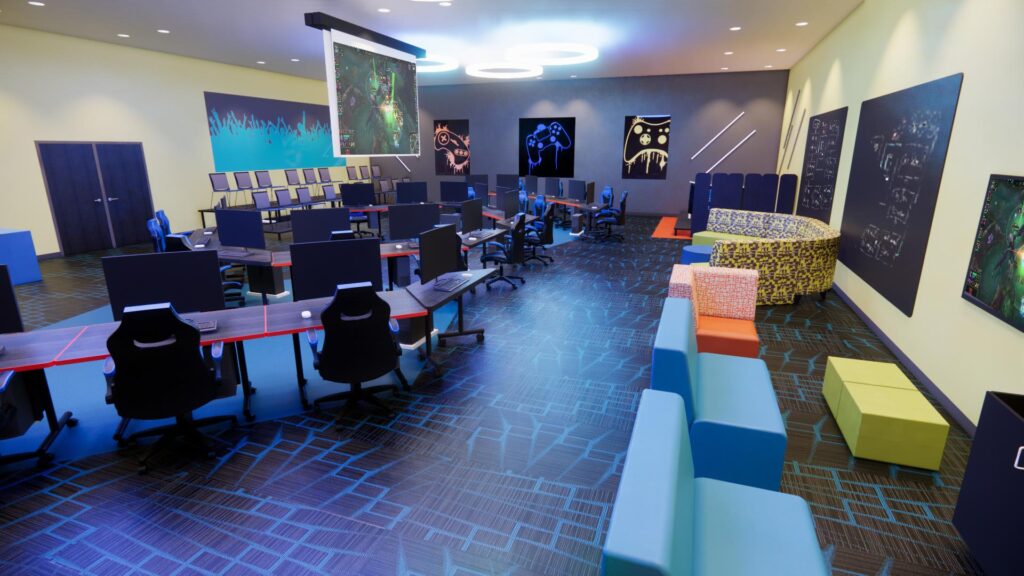
To truly work as learning environments, K-12 esports spaces must be intentionally designed with layouts and furniture that actually work for the way that students learn, play, and grow.
Why K-12 Esports Matter in Today’s Schools
For many schools, esports have become a powerful way to engage students while supporting skills that extend well beyond the game itself.
“The social impact is off the charts,” says Claire LaBeaux, chief advancement officer for the Network of Academic and Scholastic Esports Federations, noting that kids who join “have fewer problems, better attendance, and better grades.”
Esports also expand access in ways traditional extracurriculars often cannot. Because participation isn’t limited by physical ability or prior athletic experience, esports programs can reach students who may not see themselves reflected in other school activities.
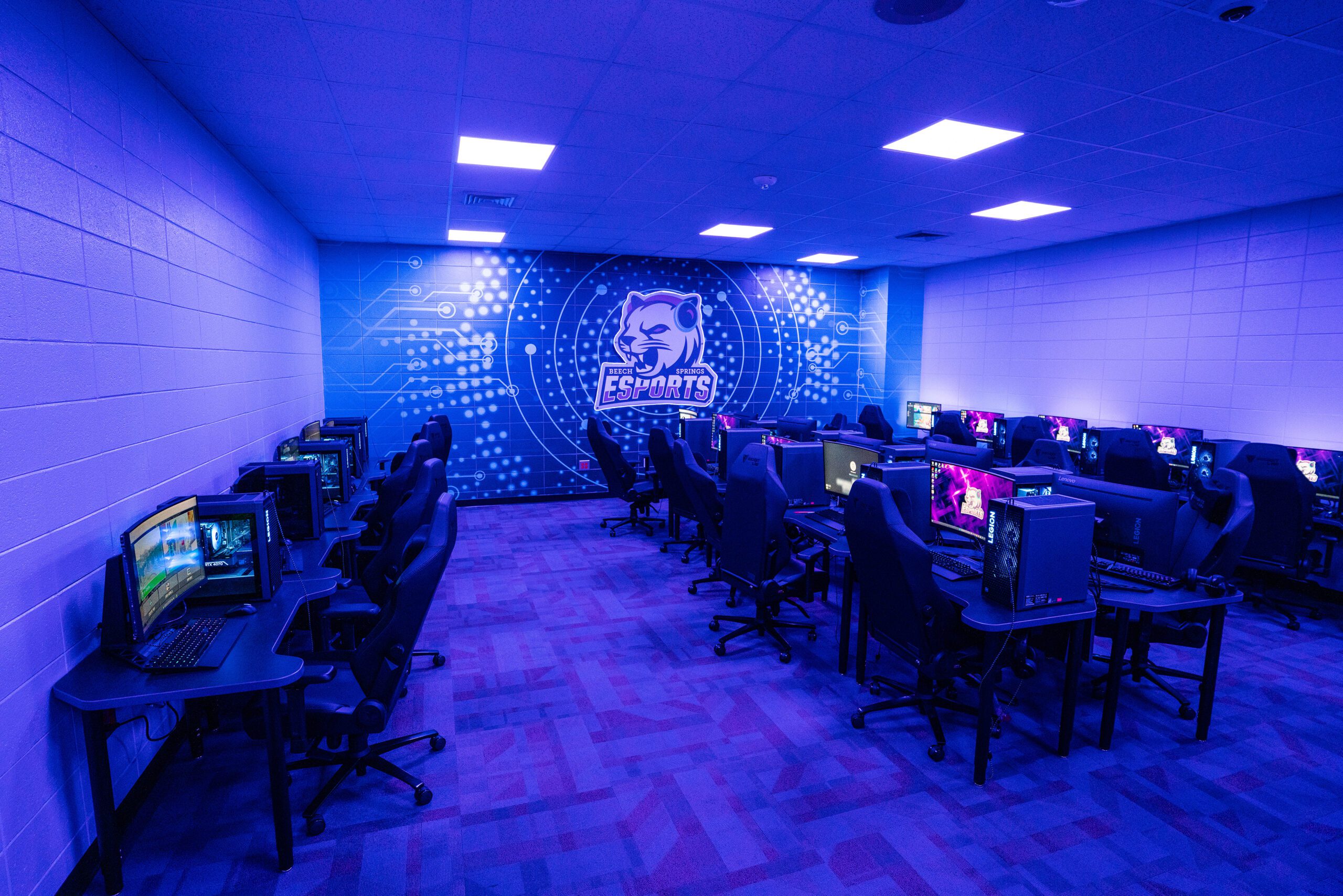
Ashley Williams, principal of Beech Springs Middle School, describes the school’s recently renovated esports arena as “a great space for kids to meet likeminded peers and come together to create this awesome learning hub.”
“The ones that don’t want to play competitive, contact sports, or don’t play an instrument, esports is a place where they can find a way to fit in, be part of a team and part of the school.”
James Wilson, Esports Educator and Coach, Beech Springs Middle School
Research and educator experience show that well-structured esports programs can support students in developing a range of valuable skills that extend into academics and personal growth including:
- Critical Thinking & Problem-Solving
- Teamwork & Collaboration
- STEM & Digital Literacy
- Resilience & Perseverance
For many students, these skills become a bridge to future opportunities. As awareness grows around collegiate programs and careers connected to technology and digital media, esports spaces are increasingly viewed as environments where students begin to see how their interests can translate to the real world.
Designing K–12 Esports Spaces That Support Learning
Esports require reliable technology (CPUs, monitors, cabling, etc.) to operate efficiently. But technology alone doesn’t define success. How the space is designed through layout, furniture, and flexibility ultimately shapes how well students learn and engage.
Layouts That Support Both Play and Instruction
Effective K–12 esports spaces balance competition with instruction. The layout needs to support team play without sacrificing an educator’s ability to manage the room and guide learning.
| Design Consideration | Why It Matters |
|---|---|
| Clear Sightlines | Allows educators to monitor student screens and behavior in real time, supporting instruction and classroom management without interrupting gameplay. |
| Collaborative Configurations | Supports team communication and coordination while minimizing unnecessary noise and distractions, helping students more effectively work together. |
| Defined Zones | Creates designated areas for gameplay, coaching, and spectators, letting the space function smoothly during both competitive and instructional activities. |
| Flexibility to Grow | Enables the space to adapt as programs expand, accommodating new games, larger teams, instructional shifts, or additional uses without requiring a full redesign. |
When students can collaborate and educators can stay connected, the space starts working the way it’s meant to.
Ergonomics Designed for Long Sessions
Unlike traditional computer labs, K-12 esports spaces are used for extended, high-focus sessions. Comfort and posture directly affect student performance and health.
| Ergonomic Element | Why It Matters |
|---|---|
| Seating | Flexible, adjustable seating supports proper posture during extended sessions, helping reduce fatigue while maintaining comfort. |
| Desk and Table Setups | Adaptable work surfaces and intentional monitor placement align with gaming standards, reducing strain on the neck, shoulders, and wrists during play. |
| Spectator Comfort | Thoughtful seating and clear viewing areas allow teammates, coaches, and observers to engage without crowding player stations. |
As esports educator and coach James Wilson explains, “These are state-of-the-art gaming chairs. They’re not like traditional classroom chairs. They’re ergonomic and adjustable in a number of ways.”
This attention to detail helps students stay comfortable and fully engaged throughout extended gameplay and instruction.
Furniture That Signals Purpose and Professionalism
While the furniture in an esports space is designed to accommodate the equipment, it can also set clear expectations. When students recognize that an environment is designed intentionally, they treat it with greater respect and focus.
| Environmental Signal | Why It Matters |
|---|---|
| Commercial-Grade Furniture | Furniture designed for daily, high-intensity use stands up to frequent movement and extended sessions, reducing wear while maintaining a consistent, high-quality environment. |
| Performance-Ready Work Surfaces | Stable desks and tables help protect equipment and provide a steady foundation for gameplay that supports consistent performance. |
| Professional Design Choices | Cohesive layouts and purpose-built furnishings communicate that the space is designed for learning and competition, shaping how students treat the environment. |
That sense of professionalism can have a powerful impact on students. As James Wilson notes, “The kids realize this is top-of-the-line equipment. As close as you can get to the real, big-league equipment. It gives them the sense that this is what professionals use —and how it should be treated.”
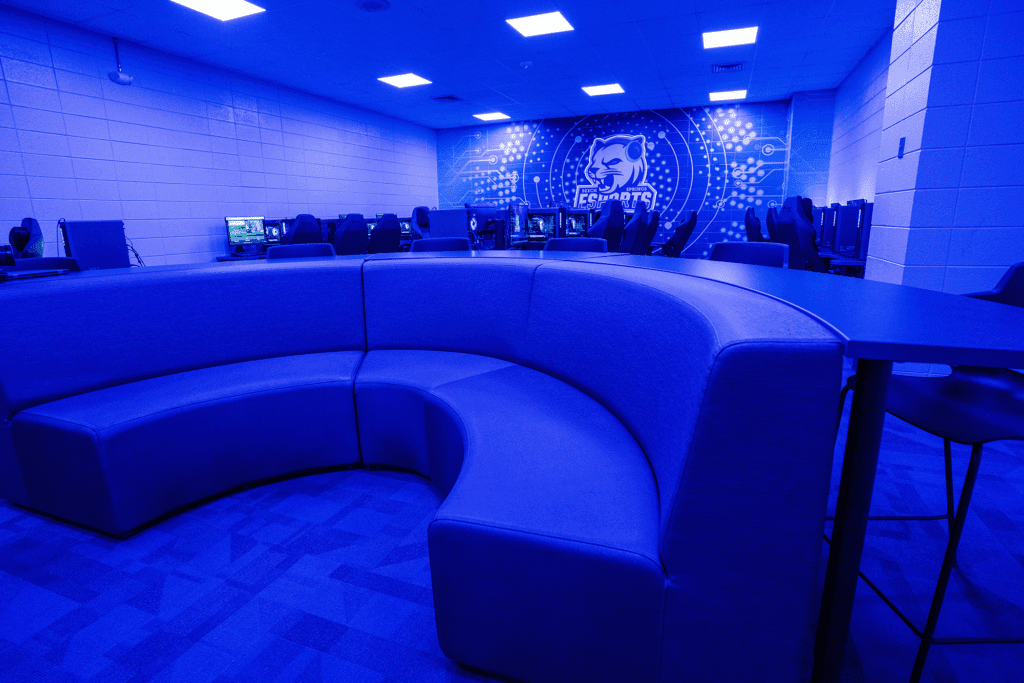
By mirroring real-world esports environments, intentional design helps elevate expectations and reinforces that esports is a program with standards, not just a place to play.
K-12 Esports as a Platform for Student Opportunity
K–12 esports programs can become student launch pads for future opportunities. They’re places where students play, but also where they discover skills, confidence, and pathways that extend to their post-secondary life.
“I wish I had this when I was growing up. I was told, ‘You’re wasting your time with video games, it’s just a hobby.’ But now as you look at the different esports competitions, payouts, sponsorship deals, collegiate scholarships — it’s a growing industry that’s only getting stronger.”
James Wilson, Esports Educator and Coach, Beech Springs Middle School
In 2026, total annual collegiate esports scholarship funding across North America is projected at $50 million, with roughly 280 colleges and universities offering varsity-level programs. This reflects a growing recognition of competitive gaming as a legitimate pathway to higher education.
Such forward momentum shifts the conversation from what K–12 esports is to what it can lead to, and underscores that investing in intentionally designed spaces today helps unlock outcomes for students tomorrow.
meteor education
What can esports become for your students?
Dr. Katrina Lewis, President and Founder of the Tennessee Academic Esports League, on what it actually takes to bring esports into the fabric of a school.