Environment as a Tool — Reading the Room: A Leader’s Overview of How Built Environments Shape Behavior, Engagement, and Learning
Course Description
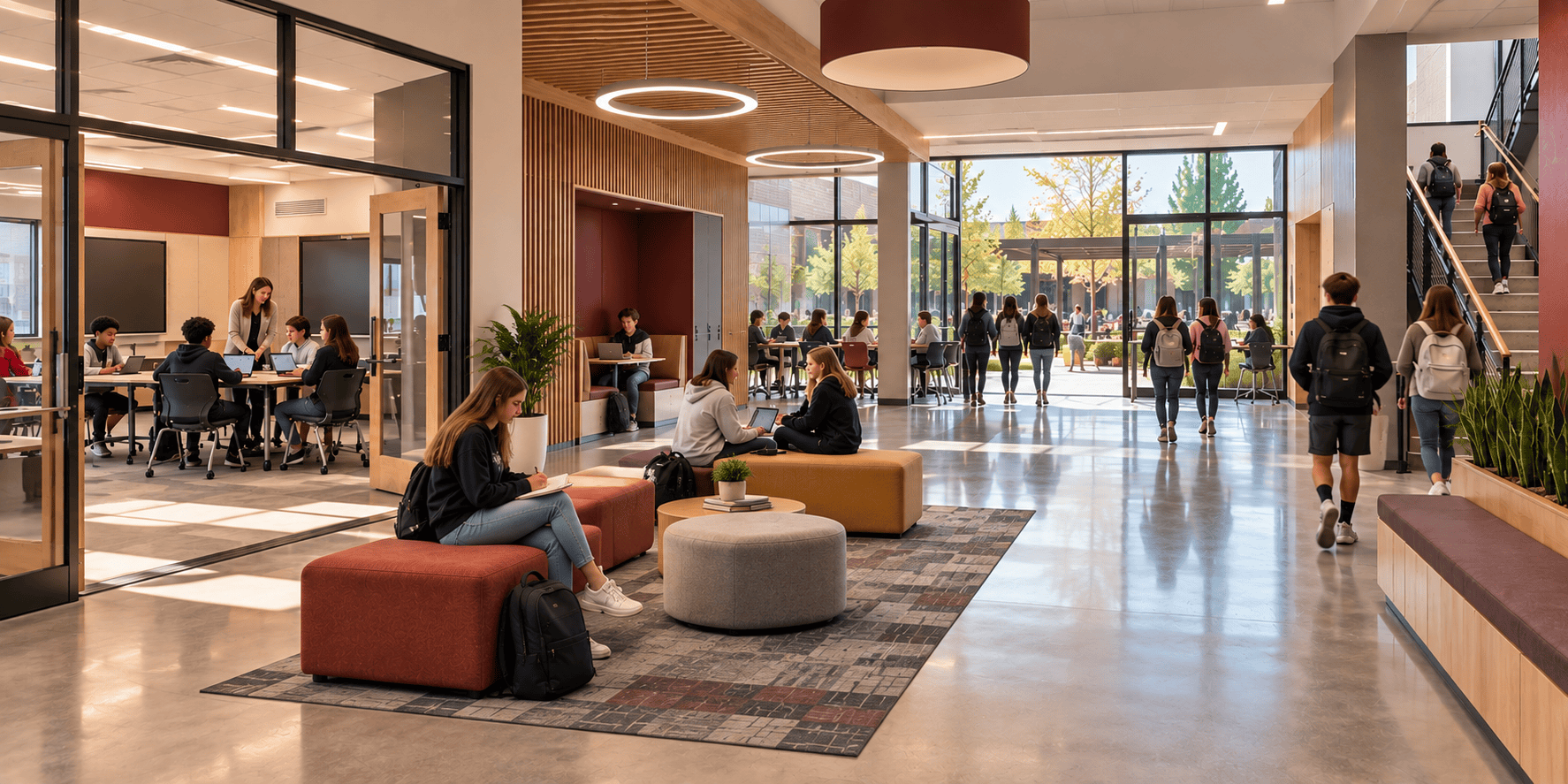
Before you can design for learning, you need to understand how spaces teach. This course frames the built environment as an active participant in instruction, not a neutral backdrop. You’ll examine the central tension at the heart of every school design: what students need (movement, sensory regulation, belonging) versus what teachers need (storage, supervision, predictability). And you’ll leave with a shared vocabulary — grounded in environmental psychology and current behavioral research — for translating that tension into smart programming decisions across classrooms, commons, transitions, and outdoor spaces.

Learning Objectives
- Identify the four categories of design decision — sensory, spatial, social, and structural — that shape student welfare and educator effectiveness in the built learning environment.
- Examine the central tension this series addresses: student-centered needs for movement and sensory regulation versus teacher-centered concerns for storage, supervision, and classroom predictability.
- Evaluate the current research base — environmental psychology, behavioral studies, and learning-environment evidence — connecting built-environment decisions to measurable health, safety, and welfare outcomes.
- Analyze how foundational design decisions — circulation, sensory load, sightlines, and zoning — shape the occupant experience across classrooms, transitions, commons, and outdoor spaces.
Course Credits
1 LU | HSW