Environment as a Tool — The Stuff Problem: Using Storage Research to Free the Student-Centered Classroom
Course Description
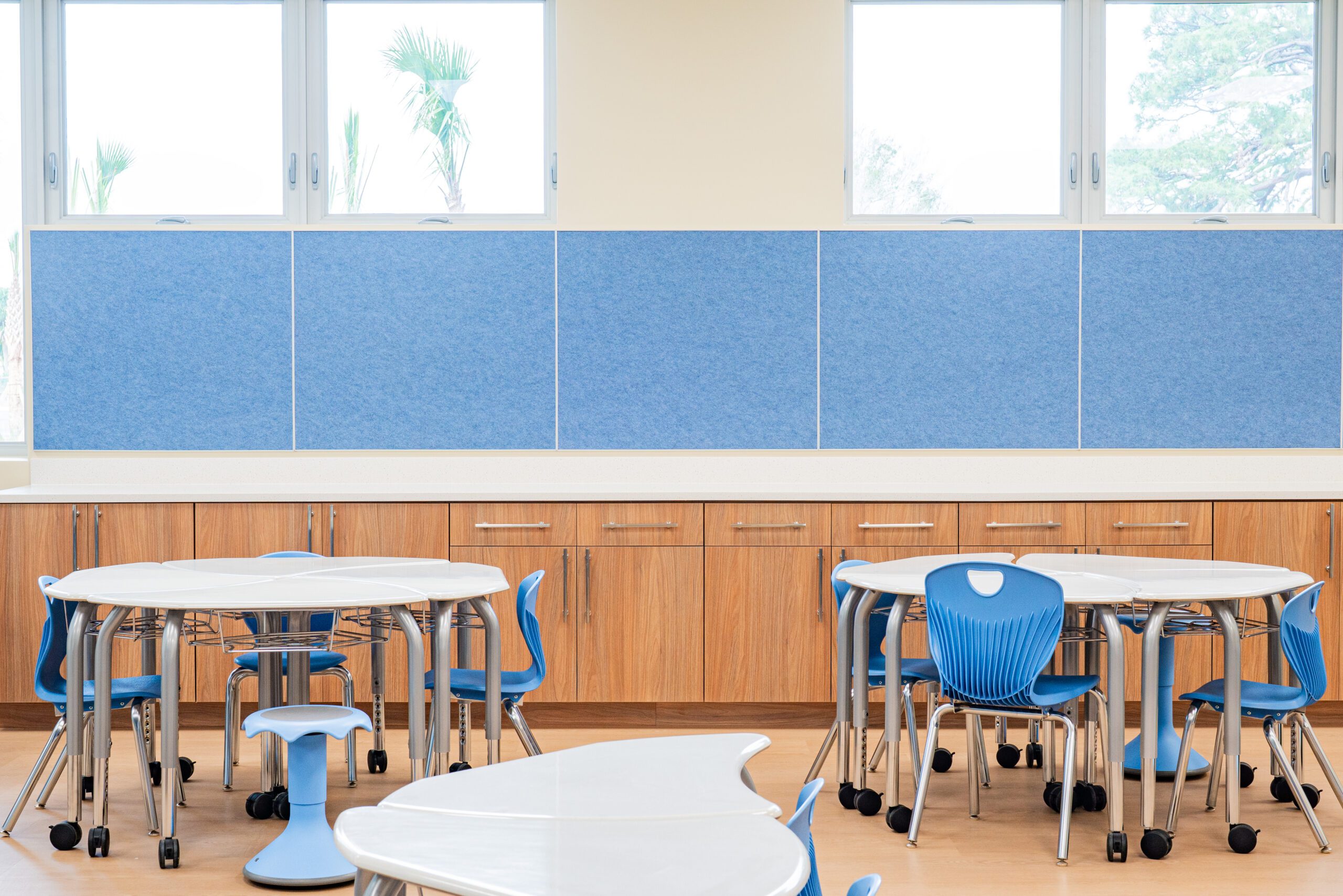
Postwar school design routinely adapted residential kitchen cabinetry into classroom casework as an inexpensive solution for a textbook-and-chalkboard curriculum. Today, this legacy infrastructure actively constrains modern pedagogy. Driven by Science of Reading mandates, STEM inquiry, and embodied cognition, modern teaching demands a massive volume of irregular, kit-based, and consumable materials that static cabinetry cannot safely hold. The result is physical classroom overcrowding, restricted student movement, and increased visual distraction.
This course addresses “the stuff problem” and details how to “unfreeze the classroom” by exploring the transition from static perimeter millwork to agile, mobile, and modular storage. Attendees will analyze empirical research linking storage organization to reduced cognitive load, improved student autonomy, and optimized physical safety. Participants will learn to balance spatial flexibility with structural utilities such as plumbed wet walls. Finally, the course evaluates the lifecycle economics, demolition liabilities, and federal tax depreciation differences between modular casework and fixed millwork to inform the design of safer, highly responsive learning environments.

Learning Objectives
- Trace the historical shift from legacy kitchen cabinetry to agile infrastructure to mitigate physical hazards. (Safety and Health). Analyze how the mid-century migration of kitchen-style casework fails modern, high-volume curricula, causing material overflow on floors and counters. Participants will learn how research informs design layouts that minimize visual clutter, reduce extraneous cognitive load, and eliminate physical tripping hazards.
- Examine the balance between student-centered infrastructure and teacher-centered desires. Participants will understand how to prevent physical strain, maximize circulation, and enable students to safely access materials when needed.
- Reclaim architectural real estate and preserve flexibility around wet-wall utilities. (Safety)
Differentiate between the “Frozen Square Footage” of fixed millwork and the “Spatial Elasticity” of modular infrastructure. Participants will learn strategies to decouple sink plumbing and mechanical drops from storage runs, preserving high-value walls for interactive surfaces while lowering the cost of future physical reconfigurations. - Evaluate life-cycle economics, indoor environmental safety, and asset classification standards. (Safety and Welfare)
Course Credits
1 LU | HSW