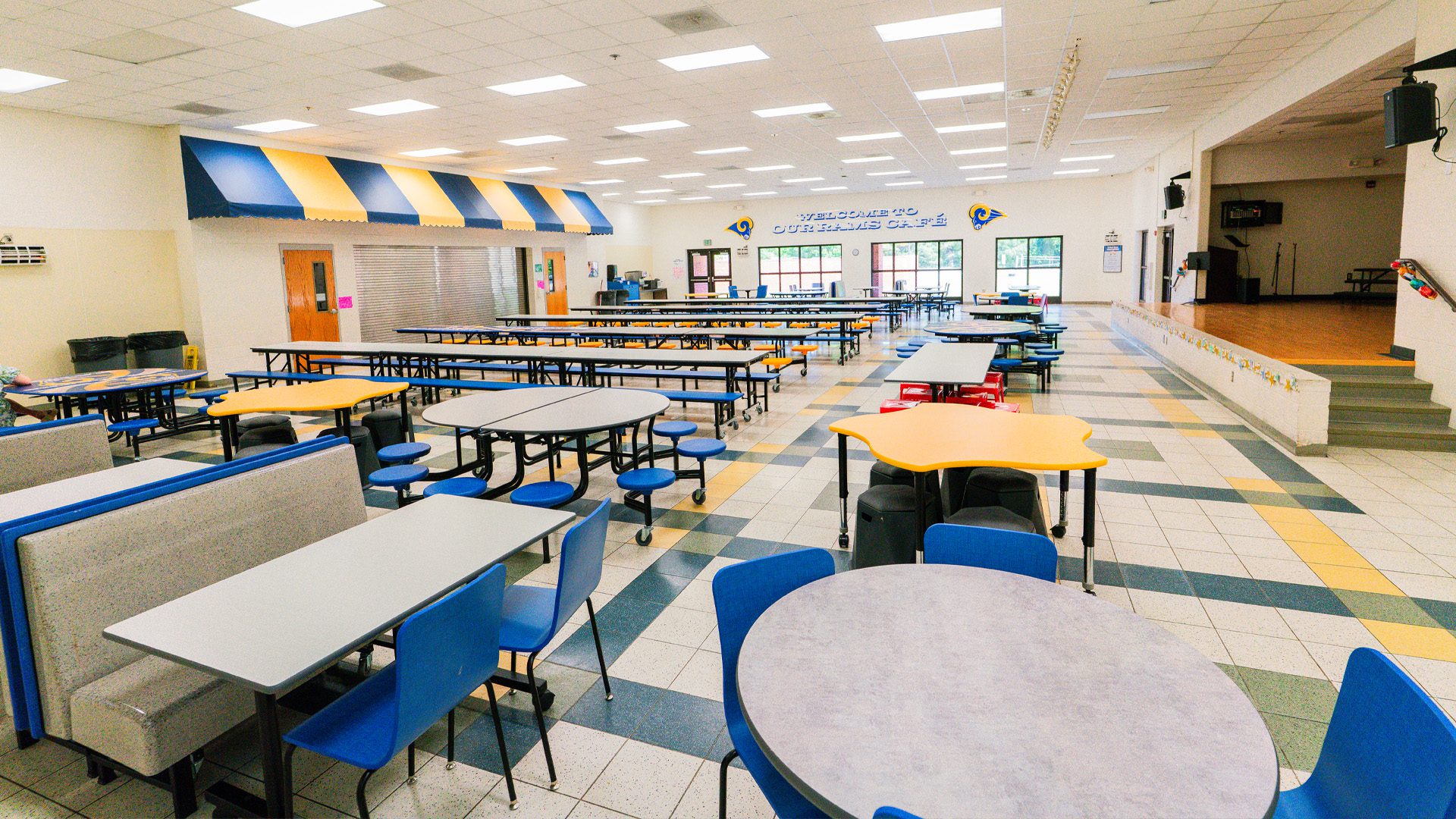
Environment as a Tool — Beyond the Classroom Door: Designing Cafeterias, Commons, and Hallways That Support Self-Regulation
Course Description
Where do most behavioral incidents in schools actually happen? Not in classrooms. They happen in cafeterias, hallways, transitions, commons, and media centers — environments that are routinely under-programmed, acoustically punishing, and visually overwhelming. These spaces bookend every part of a student’s day, yet they’re often designed last and funded least.
This course makes the case that transition and communal spaces are the most consequential health, safety, and welfare design challenge in any school project — and connects environmental psychology, trauma-informed design principles, and acoustic research to practical strategies for spaces that support student self-regulation rather than consistently undermining it.
Learning Objectives
- Identify the non-classroom settings — cafeterias, hallways, transitions, and commons — that disproportionately drive behavioral incidents and analyze the environmental factors that contribute.
- Examine the acoustic, lighting, sensory-load, and crowding research linking environmental conditions in communal spaces to student dysregulation, educator stress, and safety incidents.
- Apply trauma-informed and restorative design principles to commons and transition spaces, including zoning for high- and low-stimulation activities and visible, predictable wayfinding.
- Evaluate cafeteria, hallway, and media center designs against measurable criteria — ANSI/ASA S12.60 acoustics, accessibility, sightlines, and emergency egress — while supporting belonging and student self-regulation.
Course Credits
1 LU | HSW