Learning Spaces That Actually Work at Any Budget
Most districts want learning spaces that actually work — for student engagement, collaboration, behavior, and belonging — but budget pressure often derails progress. This article shows how to build next-generation learning environments without needing all-or-nothing renovations.
Key Takeaways
- The real problem with many “modern classrooms” (and why trends don’t equal outcomes)
- How to bust the budget myth and make high-impact improvements at any price point
- The four drivers that matter most: instruction, flexibility, usability, safety & belonging
- The practical questions leaders should ask to guide decisions and avoid wasted spend
- Budget moves that consistently deliver value: reuse what works, buy versatile, pilot first, measure impact
Learning Spaces That Actually Work at Any Budget
Any conversation about improving learning spaces tends to follow a predictable arc. It starts with excitement: “Oh my, think about what this classroom could become.” A next-generation space that supports new teaching methods, new technologies, and the real day-to-day realities of learning today. And then it runs into the same roadblock: cost.
Somewhere along the way, the assumption creeps in that better learning spaces automatically mean bigger budgets, often for brand-new buildings, massive remodels, or an all-or-nothing overhaul that simply isn’t realistic for most districts. And too often, the conversation stalls right there.
But the bigger issue isn’t budget. It’s confusion.
Because modern learning spaces don’t happen just by adding trendy furniture. A wiggly stool, taco-chip-shaped desk, or a beanbag on wheels doesn’t magically create collaboration, improve student behavior, or strengthen classroom culture. Too often, “learning space design” becomes decoration (doesn’t that look cool?) instead of design in the true sense: form following function.
A truly effective learning space is intentionally designed around what students and teachers actually need. It supports focus and movement. It reduces friction and conflict. It makes teamwork, active listening, and cooperation more natural. And it creates conditions where kindness and respect can grow, not through posters on the wall, but through the way the environment is structured.
And just as importantly, it helps create a space that feels safe.
Not just physically safe, but psychologically safe: a classroom where students experience belonging, feel respected, know what’s expected, and can take learning risks without fear of embarrassment or exclusion.
Because the most effective learning spaces aren’t defined by how much was spent. They’re defined by how intentionally they’re designed.
Busting the Budget Myth
If “cool” furniture doesn’t automatically create better learning, then neither does expensive furniture.
The idea that better learning spaces = higher cost is one of the most persistent misconceptions in K–12 learning space design. While large-scale renovations certainly have their place, meaningful impact doesn’t come from price tags alone, it comes from clarity of purpose.
The spaces that deliver the greatest instructional impact tend to share a few common drivers:
- Instructional alignment – environments built to support how teachers teach and students learn
- Flexibility – spaces that adapt to different activities and evolving needs
- Usability – layouts and furnishings that work consistently in real classrooms
- Safety & belonging – spaces that feel physically and psychologically safe, where students experience dignity, inclusion, and clear expectations
When these elements are in place, even modest updates can lead to meaningful gains in engagement and effectiveness. Thoughtful design choices — like reconfiguring layouts, improving sightlines, creating collaboration zones, or introducing truly versatile furniture — often deliver more value than high-cost, all-or-nothing upgrades.
Put simply: better learning spaces don’t require bigger budgets. They require clearer priorities, smarter planning, and design decisions grounded in how learning actually happens.
What Makes a Learning Space Actually Work
Learning spaces that deliver real impact are shaped around use, not appearance. They support instruction, adapt as needs change, and work consistently in real classrooms.
But getting there doesn’t happen by chance.
Effective spaces are the result of intentional decisions that align learning goals, learning space design choices, budget realities, and long-term use. Here’s a practical approach districts can use to create learning spaces that truly work at any budget.
A Practical Approach to Learning Spaces That Work
1. Begin with Instructional Priorities
- What works best: Clarify instructional goals, teaching models, student needs, and budget realities before selecting furniture or layouts.
- Why it matters: Prevents the space from being shaped by trends or assumptions.
- Expected results: Spaces that support how teachers teach and how students learn.
Questions to ask:
- What instructional practices do we want this space to support (whole-group, small-group, collaboration, independent work)?
- What student needs should influence design decisions (inclusion, sensory needs, behavior supports, mobility)?
- What budget constraints are real and what outcomes matter most within those constraints?
2. Design Around Real Classroom Use
- What works best: Translate instructional priorities into research-informed layouts, zones, and furniture strategies based on how classrooms function day to day.
- Why it matters: Strong learning spaces are designed around use, not appearance.
- Expected results: Better classroom flow, smoother transitions, and stronger support for collaboration and focus.
Questions to ask:
- How do students and teachers actually move through the classroom? Where are the bottlenecks and friction points?
- What routines should the environment make easier (transitions, group work, storage, teacher proximity, line-of-sight)?
- How can the design support both engagement and calm, reducing conflict while strengthening belonging and respect?
3. Match Solutions to Budget Without Losing Function
- What works best: Identify options that protect the design intent across a range of price points, using smart purchasing strategies when available.
- Why it matters: Districts avoid getting boxed into all-or-nothing upgrades.
- Expected results: Well-designed spaces delivered within budget and without compromising usability.
Question to ask:
- Which design elements matter most to keep (layout, sightlines, teacher mobility, versatile surfaces), even if we simplify other areas?
- Are we comparing options across multiple manufacturers and price points? Or are we limited to one catalog and one “version” of the solution?
- What purchasing pathways or contracts can help us stretch budget without lowering quality?
Partner Note
Districts often get the best results by working with partners who can offer broad design variety and multiple price-point options. When you aren’t limited to a single furniture line or vendor set, it’s much easier to tailor solutions to the realities of budget without sacrificing function.
4. Support Teacher Adoption
What works best: Provide teacher orientation and guidance so educators understand how to use and adapt the environment for different instructional needs.
Why it matters: Even the best-designed spaces fall short without teacher confidence and practical routines.
Expected results: Teachers feel empowered, student routines improve, and the environment performs as designed.
Questions to ask
- Do teachers understand how the space is meant to support instruction? Have they had time to practice using it?
- What routines and norms need to be established so the space supports cooperation, active listening, and respectful behavior?
- What flexibility is realistic for teachers day to day (what can be moved, what should stay stable, what causes friction)?
5. Validate and Improve Over Time
What works best: Observe how the space is used after implementation, gather educator feedback, and evaluate engagement indicators to guide refinements.
Why it matters: Confirms what’s working, surfaces what’s not, and informs smarter future investments.
Expected results: Stronger long-term value and evidence that the space is supporting learning and classroom culture.
Questions to ask:
- What are we seeing in day-to-day use? Are the zones working as intended, or are students/teachers working around the design?
- What signals show the space is improving engagement, collaboration, and classroom culture (not just looking better)?
- What small adjustments could remove barriers and increase effectiveness before investing additional dollars?
By treating learning environments as a full lifecycle, from planning through measurement, districts avoid false tradeoffs between affordability and effectiveness. Every decision builds toward a space that works today and continues to deliver value over time.
The Four Design Drivers Behind Spaces That Work
1. Instructional Alignment Comes First
Spaces should reinforce how teachers teach and how students learn, rather than requiring workarounds. That means supporting:
- Smooth transitions between whole-group, small-group, and independent work
- Teacher mobility and proximity
- Clear sightlines and classroom manageability
When design reflects instruction, the environment strengthens learning instead of competing with it.
2. Flexibility Without Complexity
Flexibility means giving teachers and students options without adding friction. Effective spaces often include:
- Versatile furniture that supports multiple learning activities
- Layouts that allow collaboration and independent work to coexist
- Pieces that can adapt over time as needs evolve
This built-in adaptability helps spaces stay relevant long-term without repeated investments.
3. Engagement Driven by Usability
Engagement comes from spaces that are intuitive, comfortable, and easy to use. Design choices that consistently support engagement include:
- Seating that balances collaboration and focus
- Work surfaces that encourage participation and discussion
- Defined zones that support different learning modes
When spaces are aligned to learning activities and easy to navigate, engagement follows naturally.
4. Safety, Belonging, and Purpose Over Passing Trends
Not every new idea improves outcomes. The most effective environments are shaped by research, observation, and educator input rather than trends.
Purposeful design focuses on:
- How spaces are actually used day to day
- Where small changes remove barriers to instruction
- How the environment supports dignity, respect, and belonging
- Making targeted improvements tied to clear goals
This keeps investments practical, scalable, and budget conscious — while helping students feel safe enough to participate, take risks, and grow.
Smart Budget Moves That Maximize Impact
Many districts see the strongest learning environment improvements by being selective and strategic with their investments.
High-impact, budget-conscious approaches include:
- Reusing what already works
Functional desks, tables, and storage don’t always need replacing. Keeping proven elements allows budgets to stretch further where change is truly needed. - Choosing versatile over single-purpose furniture
Multi-use tables, mobile seating, and adaptable storage reduce the need for specialized pieces and keep classrooms flexible over time. - Phasing improvements through pilot programs
Piloting solutions in select spaces allows districts to test, refine, and scale — minimizing risk while building internal buy-in. - Measuring the impact
Data-informed evaluation helps districts justify investments, demonstrate ROI, and refine learning environments over time.
A Real-World Example of Smarter Design
A clear example of thoughtful design delivering meaningful impact without breaking the bank comes from Sauk Centre Public Schools.
Rather than investing in new buildings, the district reimagined classrooms and shared spaces within legacy buildings to better support engagement. The focus wasn’t on what looked new, it was on what would work: layouts, furniture selection, and shared access.
As Sheila Flatau, Principal of Sauk Centre Secondary, explains:
“We don’t need a brand new building to make a change. We’re able to create spaces all teachers can access and use with what we already had.”
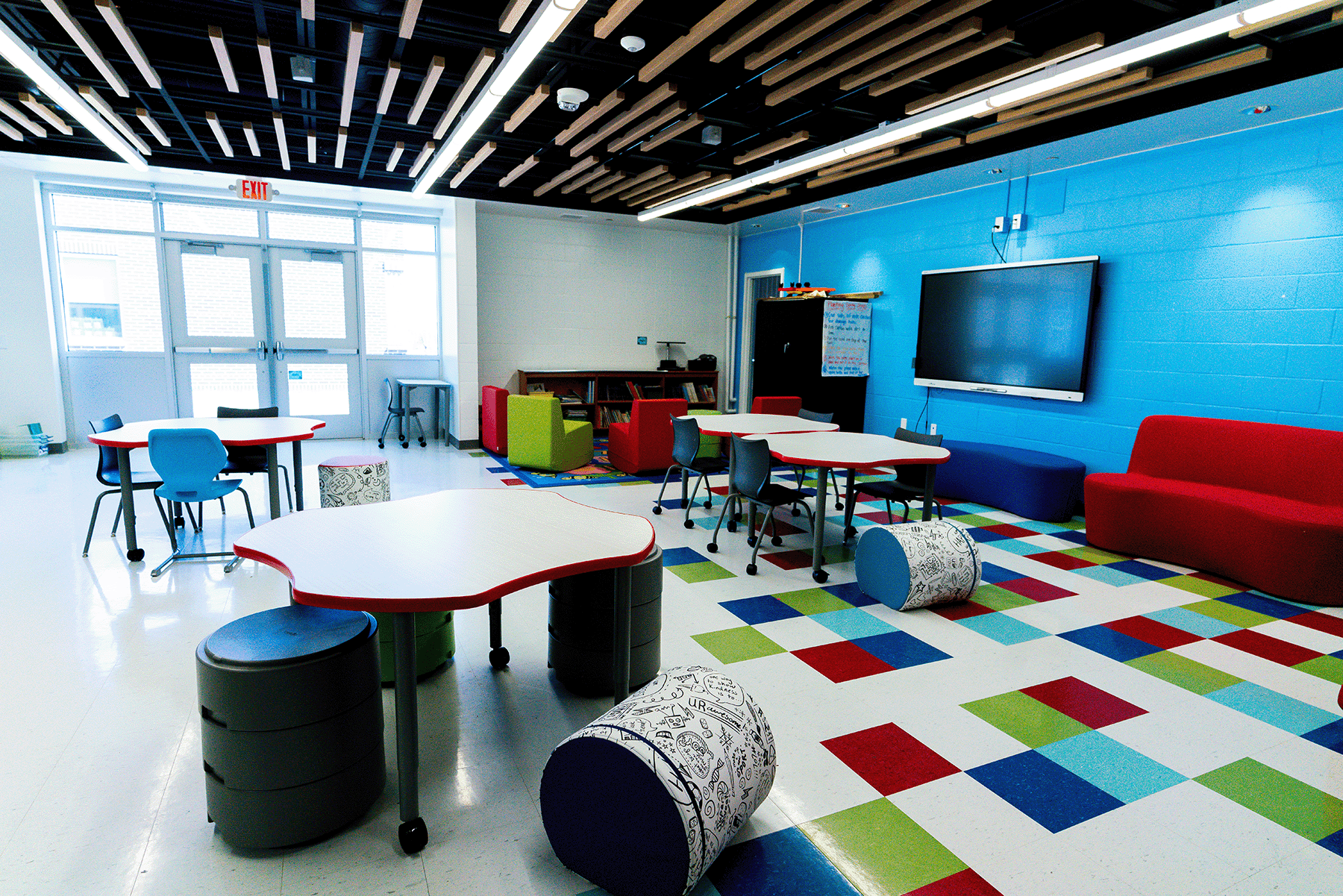
That approach translated into immediate gains. According to Amy Millard, Principal of Sauk Centre Elementary:
“[The students] say, ‘Wow, this looks so different! I can’t wait to use that!’ The engagement has really increased.”
Making Learning Spaces Work at Any Budget
Effective learning spaces are built through smart planning and clear instructional intent, regardless of budget size.
When districts work with a partner who understands how teachers teach and students learn, designs and budgets can fully align. Adaptability replaces rigidity. Prioritization replaces pressure. And the question shifts from “What can we afford?” to “What will actually make a difference?”
Because impactful classrooms don’t come from bigger budgets or shiny new buildings. They come from intentional planning, thoughtful design, and partners who know how to meet districts where they are and help them move forward from there.
Meteor education
Curious how smarter design comes to life across different learning spaces?
Explore how intentional planning supports classrooms, media centers, and shared spaces at any budget.