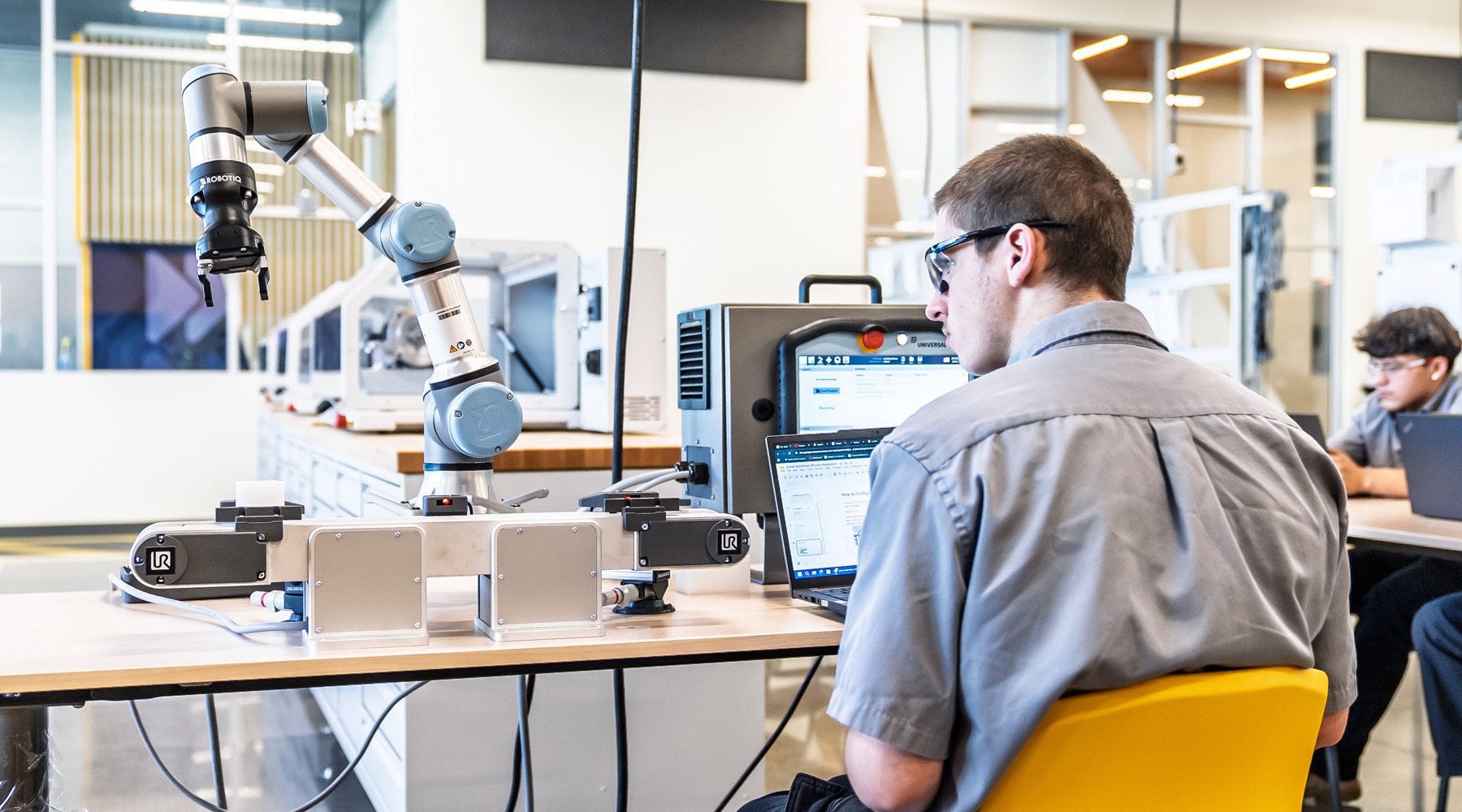
How to Use Your Perkins V Dollars: A Funding Guide
How to Use Your Perkins V Dollars: A Pre-Deadline Planning Guide
The Perkins V fiscal year closes June 30. For K-12 districts, that is the hard deadline for obligating or expending funds, and in many states, anything left unencumbered is subject to reallocation or loss. Post-secondary timelines vary by state plan, but the same use-it-or-lose-it logic applies.
Our team has put together a practical guide for CTE leaders who have funds left to deploy and want to put them to work before the window closes. By the end, you will know which spending categories are still on the table, where your dollars have the greatest strategic impact, and how to move quickly without creating compliance headaches.
A Quick Refresher on Perkins V
| Element | Details |
|---|---|
| What it is | Federal CTE funding; authorized by the Strengthening Career and Technical Education for the 21st Century Act, signed into law July 31, 2018 |
| Who receives it | Secondary (K-12) and postsecondary eligible recipients |
| How it flows | Federal government allocates to states via formula; states distribute to local eligible recipients based on state-approved plans |
| Total investment | Approximately $1.4 billion annually in Basic State Grant (Title I) funds |
| Core requirement | All spending must align with the Comprehensive Local Needs Assessment (CLNA) and support approved CTE programs of sufficient size, scope, and quality |
If you have a CLNA or an approved local plan, the question now is how to move those remaining dollars into high-impact investments before June 30.
What Perkins V Dollars CAN Fund
Section 135 of Perkins V defines local uses of funds. The following table reflects the major allowable categories as established by the statute and consistent with guidance published by the U.S. Department of Education’s Office of Career, Technical, and Adult Education (OCTAE) and state-level allowable cost documents.
All expenditures must be reasonable, necessary, allocable to an approved CTE program, and properly documented under 2 CFR Part 200 (Uniform Grant Guidance). Funds must supplement, not supplant, non-federal resources.
Allowable Use Categories
| Category | What’s Covered |
|---|---|
| Curriculum development and program improvement | Developing, updating, or improving CTE coursework; integrating academic and technical content; articulation agreements; dual/concurrent enrollment program costs |
| Equipment, technology, and instructional materials | Industry-standard tools, machinery, lab equipment, and technology directly supporting approved CTE programs; specialized furniture or fixtures integral to operation of CTE equipment or for safety; software licenses for CTE skill development; repair and maintenance of existing CTE equipment |
| Professional development | Training for CTE teachers, faculty, administrators, and counselors; substitute costs while teachers attend approved CTE professional development; integration of academic and technical instruction |
| Career guidance and academic counseling | Additional counselor salary and support staff providing postsecondary and career pathway information to CTE students; career exploration and awareness activities |
| Work-based learning and industry connections | Work-based learning program support; industry advisory council activities; employer engagement in program design and validation |
| Industry-recognized credentials and certifications | Costs for certification assessments tied to state-approved CTE performance measures (postsecondary credential attainment) |
| Recruitment, retention, and support for special populations | Outreach to underrepresented students; support services for special populations (including individuals with disabilities, economically disadvantaged students, English learners, foster youth, and others defined under Perkins V); childcare for economically disadvantaged students to enable CTE participation |
| Career and Technical Student Organizations (CTSOs) | Supplies and equipment for CTSOs that are an integral part of an approved CTE program; activities available to all students in the program; preparation for skills competitions aligned with program standards |
| Administrative costs | Up to 5% of total subgrant for grant administration; supervision and compliance activities |
What Perkins V Generally Does NOT Fund
- General construction, building renovation, or anything that becomes part of a permanent structure (including rewiring or widening doorways)
- Standard multipurpose classroom furniture (chairs, desks, bookcases) not unique to or required by a specific CTE tool or piece of equipment
- Student membership fees, individual travel, food, or lodging for competitions
- Expenses that supplant (replace) prior non-federal spending
- Non-CTE teacher salaries or general academic programming
- Student tuition, uniforms, or personal items
| Note on Perkins V allowable uses |
|---|
| State plans vary. Some states set minimum spending floors for professional development or other categories. Others restrict certain expenditures further. Always cross-reference your state CTE office guidance before finalizing a budget amendment. |
Where Your Dollars Have the Biggest Impact
Now that we know the allowable uses, the real question is which investments will drive the most durable program improvement. Consider these four lenses as you evaluate your remaining budget.
1. Industry-aligned, hands-on environments The goal of CTE is to replicate the professional environment. Students should be working with the same tools and equipment that industry professionals use. Equipment and lab configurations that mirror local employer expectations directly serve this purpose, and they are exactly the kind of investments Perkins V was designed to fund
2.Equipment tied to local workforce demand Every CLNA requires you to examine labor market data and align programs to high-skill, high-wage, or high-demand occupations in your region. Remaining equipment or technology purchases that directly support those high-demand pathways represent the strongest return on remaining CTE funding K-12 dollars. These investments also strengthen the evidence base for your next CLNA cycle.
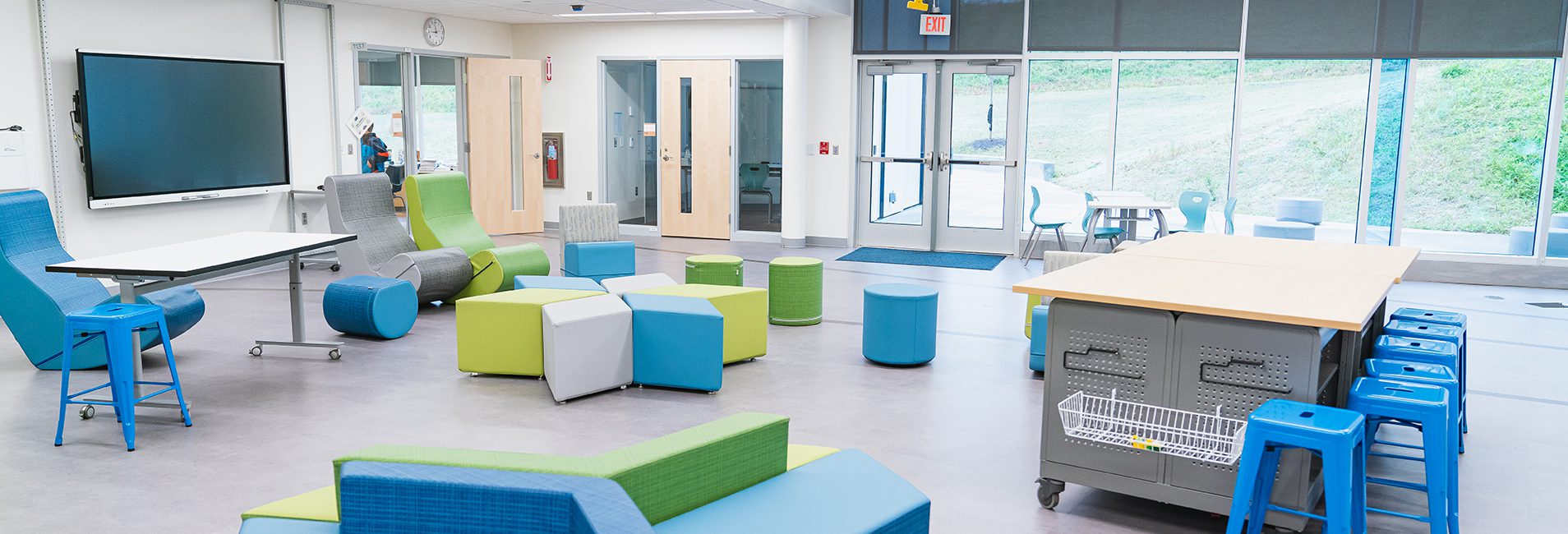
3. Flexible, adaptable learning spaces over single-purpose builds Perkins V funds cannot pay for construction. But they can fund specialized furniture, fixtures, and equipment that transform a CTE space from static to adaptable. Flexible environments that support multiple instructional modalities and evolving industry expectations provide longer-term value than single-purpose configurations. Meteor Education aligns learning spaces with curriculum and teaching methods by partnering with educators who have classroom teaching experience, helping districts maximize the impact of available CTE dollars without overbuilding.
4. Spending that strengthens your next CLNA Every dollar obligated before June 30 should be traceable back to a need identified in your current CLNA. But forward-looking leaders also think about how this spending strengthens the evidence base for the next cycle. Professional development, credential pathways, and program quality improvements all generate outcomes data that improves future planning, not just current compliance.
A Planning Checklist Before the Perkins V Deadline
Work through this checklist now, not right before the deadline.
- Pull your current budget report. Identify every unspent or unencumbered line item by category. Know exactly what remains.
- Cross-reference unspent funds against CLNA priorities. If a purchase cannot be tied to a specific gap or need in your current CLNA, it is a compliance risk.
- Confirm alignment with your state Perkins V plan. Your state may impose additional requirements, spending floors, or category restrictions beyond Section 135 of the federal statute.
- Identify “shovel-ready” investments. Equipment, instructional materials, CTE lab furnishings, curriculum, and certifications can often be procured and obligated before June 30 if vendor relationships are already in place. Focus here first.
- Audit vendor lead times. Equipment and lab builds take time. If you do not have a vendor engaged by late April or early May, you risk the Perkins V deadline passing before delivery and installation are complete. Obligation date matters, but so does your ability to document receipt of goods or services before liquidation deadlines.
- Document everything. For every expenditure, maintain records showing the CTE program served, the CLNA need it addresses, and how costs were determined to be reasonable and necessary under 2 CFR 200. This documentation is your audit trail.
- Engage partners who can execute quickly. For CTE equipment, curriculum, or learning environment investments, work with partners who understand Perkins V allowable uses and can turn proposals around quickly. As the leading provider of turnkey learning space solutions for K-12 schools, Meteor Education’s turnkey model, which covers collaborative design, project management, installation, and post-install Environment Orientation training is structured to help districts execute within tight grant timelines.
- Check Perkins V reallocation rules with your state office. If your district cannot obligate remaining funds by June 30, understand the reallocation process in your state before assuming funds will carry over.
Common Pitfalls to Avoid
- Rushing into equipment purchases not aligned with program goals. A fast procurement that cannot be tied to your CLNA is a compliance risk, not a solution. Alignment comes first.
- Overlooking professional development and curriculum. Districts nearing the Perkins V deadline often prioritize big-ticket equipment. Professional development is an equally valid, often underfunded, and frequently shovel-ready use of remaining dollars.
- Waiting until May or June to finalize vendor partnerships. Equipment lead times, installation schedules, and project management timelines do not compress to accommodate fiscal year-end urgency. Engage vendors now.
- Failing to document the CLNA connection. Every expenditure needs a clear paper trail connecting it to the needs assessment. “We needed equipment” is not sufficient documentation, so the specific gap and program need must be traceable.
- Assuming carryover is available. In many states, unobligated Perkins V funds are subject to reallocation, not automatic carryover. Carryover policies vary by state plan and are not guaranteed to be dollar-for-dollar. Contact your state CTE office to confirm.
Put Your Remaining Perkins V Dollars to Work
Meteor Education partners with districts and postsecondary institutions to put remaining Perkins V dollars to work in CTE labs and learning environments. As the only national provider offering both educational furniture and comprehensive CTE equipment solutions for K-12 schools, with a network of 240+ manufacturer partners, Meteor’s Collaborative Design approach pairs an experienced interior designer with an expert educator to develop environments aligned to your program goals and your CLNA. From Current Environment Assessments to post-installation Impact Reports, the process is built to document and measure results.
Whether you are investing in a CTE lab modernization, flexible instructional spaces, or industry-aligned equipment and curriculum, Meteor’s turnkey model covers design, installation, project management, and post-install training all within the scope of what Perkins V allowable uses permit. Speak to an expert before the deadline: meteoreducation.com
Frequently Asked Questions
For most secondary eligible recipients, Perkins V funds must be expended or obligated by June 30 of the grant year, with liquidation deadlines typically following in August. However, state plans vary. Some states allow limited carryover under specific conditions, while others treat unobligated funds as subject to reallocation. Post-secondary timelines also differ. Always confirm the exact obligation and liquidation deadlines with your state CTE office, as they govern the specific rules for your award.
Yes, with an important distinction. Standard multipurpose classroom furniture (i.e. generic desks, chairs, bookcases) is generally not allowable. However, furniture that is specialized or required for that equipment to operate safely and effectively in an approved CTE program can be an allowable expense. As with all Perkins expenditures, documentation of the program connection and cost reasonableness is required.
This depends on your state’s Perkins V plan. In many states, funds that are not obligated by June 30 are subject to reallocation to other eligible recipients, and carryover is either not permitted or is redistributed on a formula basis rather than returned dollar-for-dollar to the original recipient. Some states do allow limited carryover under defined conditions. Failing to obligate funds by the deadline in states with strict reallocation policies means your district loses access to those dollars. Contact your state CTE office to understand exactly what the rules are for your award.
Ready to transform your existing space into a dynamic learning hub that engages every student? Contact the K-12 learning environment experts at Meteor Education today to start a conversation and bring your vision to life.
Sources
- U.S. Department of Education. (2026, February 6). Perkins V (Strengthening Career and Technical Education for the 21st Century Act). https://www.ed.gov/adult-programs/adult-education-laws-and-policy/perkins-v
- U.S. Department of Education, Office of Career, Technical, and Adult Education. (2025). State allocations. https://cte.ed.gov/grants/state-formula-grants/state-allocations
- U.S. Department of Education, Office of Career, Technical, and Adult Education. (2026). Perkins V. https://cte.ed.gov/legislation/perkins-v
- Electronic Code of Federal Regulations. (2024). Title 2—Grants and agreements, Part 200. https://www.ecfr.gov/current/title-2/subtitle-A/chapter-II/part-200
- Association for Career and Technical Education. (2025). Perkins 101: Funding (February 2025). https://www.acteonline.org/wp-content/uploads/2025/03/ACTE-Perkins101-Funding-Feb2025.pdf
- Minnesota Department of Education. (n.d.). Criteria for secondary Perkins funded equipment purchases. https://education.mn.gov/mdeprod/idcplg?IdcService=GET_FILE&dDocName=MDE058261
- Advance CTE. (n.d.). Perkins Act. https://careertech.org/what-we-do/engaging-policymakers/federal-policy-agenda/perkins-act/
- Illinois State Board of Education. (n.d.). CTE consolidated application: Funding allowable costs. https://www.isbe.net/Documents/CTE-CONSOLIDATED-APP-FUNDING-ALLOWABLE-COSTS.pdf
- Association for Career and Technical Education. (2024). Strengthening Career and Technical Education for the 21st Century Act (Perkins V). https://www.acteonline.org/wp-content/uploads/2024/05/COMPS-3096.pdf
- Ohio Department of Education. (2024). FY24 Perkins regulations and allowable use of funds guidance. https://education.ohio.gov/getattachment/Topics/Finance-and-Funding/School-Payment-Reports/State-Funding-For-Schools/Career-Tech-Planning-and-Funding/FY24-Perkins-Regulations-and-Allowable-Use-of-Funds-Guidance.pdf.aspx
- Texas Education Agency. (2024). 2024–2025 CLNA guidebook. https://tea.texas.gov/academics/college-career-and-military-prep/career-and-technical-education/2024-2025-clna-guidebook.pdf
- Texas Higher Education Coordinating Board. (n.d.). Perkins allowable cost guide. https://reportcenter.highered.texas.gov/contracts/rfo-rfp-rfq-rfa/perkins-allowable-cost-guide/
Get in touch
Find Your Local Studio
Meteor Education partners with schools to create collaborative spaces that accelerate engagement and empower educators.