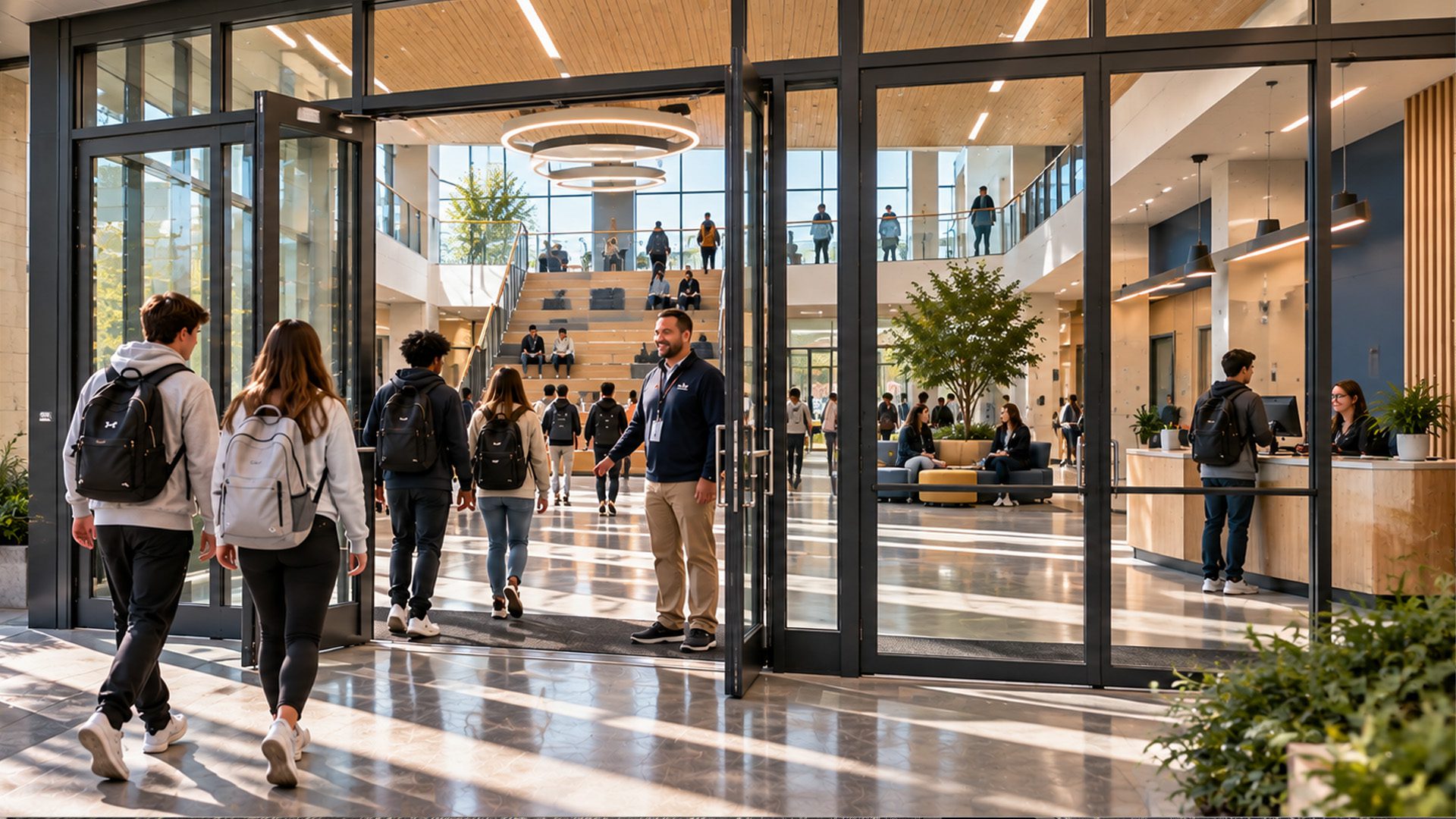
The Open Fortress — Reconciling Safety and Humanity in School Design
Course Description
Safe and beautiful are not opposites. This course proves it.
Schools have hardened in response to real and tragic threats — sometimes in ways that themselves harm the students they were meant to protect. Landmark replacement schools have shown that genuine physical security and a humane, hopeful environment aren’t in tension: they are a design problem with solutions. This course gives you those solutions — from layered CPTED and PASS frameworks to the human side of school security that no checklist covers.
Because sometimes a district comes to an architect after a tragedy, and the project is never just a building. It’s a community’s attempt to reclaim safety, restore trust, and decide what to carry forward and what to leave behind. You’ll learn how to navigate that with skill and care: engaging survivors and families in ways that heal rather than extract; balancing grief with the urgency of a functional school; and understanding how design itself — the memorial alcove, the threshold moment, the view of something living — can be part of how a community moves forward.
In post-tragedy design, getting both right is an act of care for an entire community.

Learning Objectives
- Identify the layered approach to school physical security — site, perimeter, building envelope, interior, and operational — used in current best-practice school projects, and evaluate each layer against student welfare criteria.
- Examine documented design strategies from post-tragedy school replacements — including how architects engage grieving communities, balance preservation and renewal, and integrate spaces of memory and meaning into facilities that also deliver genuine physical security.
- Apply CPTED principles and Partner Alliance for Safer Schools (PASS) guidelines to school design without compromising student well-being or the quality of the learning environment.
- Describe how to structure meaningful engagement with tragedy-affected school communities — including survivors, families, and staff — in ways that support collective healing, build trust in the design process, and produce built outcomes that honor both loss and the possibility of what comes next.
Course Credits
1 LU | HSW