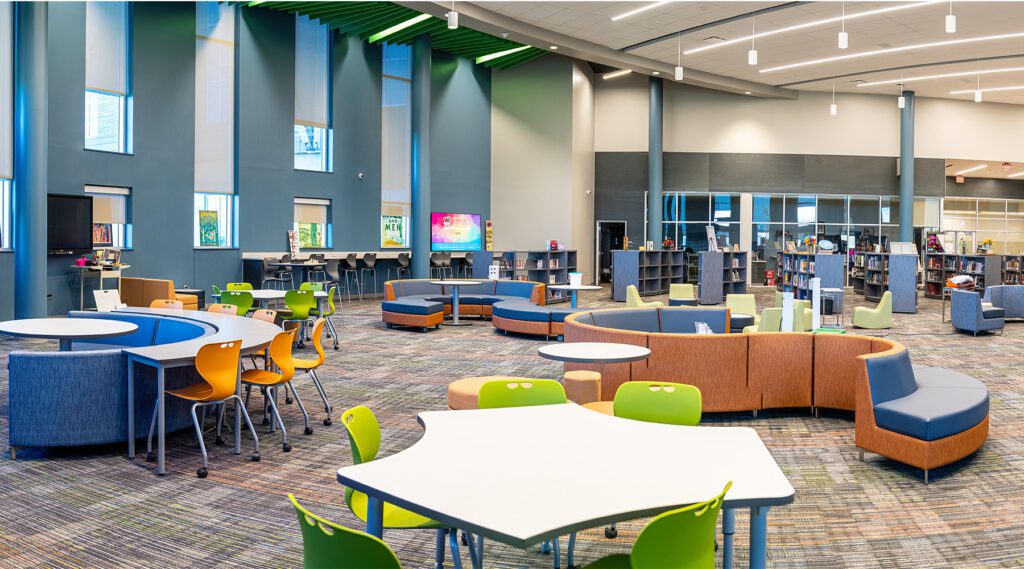
Learning Environment Projects Made Simple: How Districts Deliver High-Impact Spaces
Next-generation learning spaces can be transformational, but delivering them can feel overwhelming.
Between design rounds, ordering and lead times, shifting construction schedules, installation coordination, and teacher readiness, districts are often juggling dozens of moving parts at once. This article breaks down how districts make complex learning environment projects manageable by reducing handoffs, aligning planning through implementation, and creating clear accountability. The result: high-impact spaces delivered on time, on budget, and without the chaos.
What you’ll get out of this article:
- Why learning environment projects feel complex (and why it’s usually a coordination issue, not a vision issue)
- How “too many cooks in the kitchen” creates delays, rework, and budget surprises
- What an end-to-end approach actually means in practice and how it simplifies delivery
- How simplifying complexity protects budget outcomes and reduces late-stage redesign
- A real district example: how Chesterfield simplified a multi-site transformation and came in under budget
How Districts Deliver High-Impact Learning Spaces Without the Headaches
Modern K–12 learning environment projects are rarely simple.
Even one space can trigger a chain reaction: instructional planning, multiple design rounds, furniture and equipment decisions, ordering and lead times, installation coordination, shifting construction schedules (because construction rarely runs perfectly), and teacher readiness.
And when a project spans multiple schools, or includes specialized environments like CTE labs or STEM spaces, the moving parts multiply fast.
That’s the moment many districts feel it: we’re trying to deliver next-generation spaces without losing our minds.
Because when there are too many cooks in the kitchen, timelines slip, decisions collide, and the district is left trying to hold everything together. The good news? Complexity doesn’t have to mean chaos.
Why K-12 Projects Feel So Complicated
Most district leaders don’t struggle because they lack vision. They struggle because responsibility gets fragmented.
Design lives in one place. Purchasing lives in another. Installation lives somewhere else. Teacher orientation is critical but often addressed late.
The result is predictable:
- too many handoffs
- competing timelines
- disconnected decisions
- solutions that look good on paper but don’t work together in real classrooms
And when you add integrated environments (science labs, media centers, CTE spaces) complexity rises again. More equipment. More vendors. More sequencing. More opportunities for delays and rework.
The issue isn’t ambition. It’s coordination.
Simplification Isn’t Cutting Corners. It’s Managing Complexity Early
Simplifying a complex project doesn’t mean shrinking the scope or lowering the standard.
It means building an approach that reduces friction and protects alignment, so the space you envisioned is the space you actually deliver.
After 30+ years of completing thousands of K–12 projects, one pattern is clear:
The best outcomes come from districts that manage complexity early and manage it together.
That’s what a comprehensive process enables. One that integrates:
- planning
- design
- sourcing
- delivery
- adoption
- measurement
When those elements are aligned from the start, projects become dramatically more manageable, especially large, specialized, multi-site initiatives.
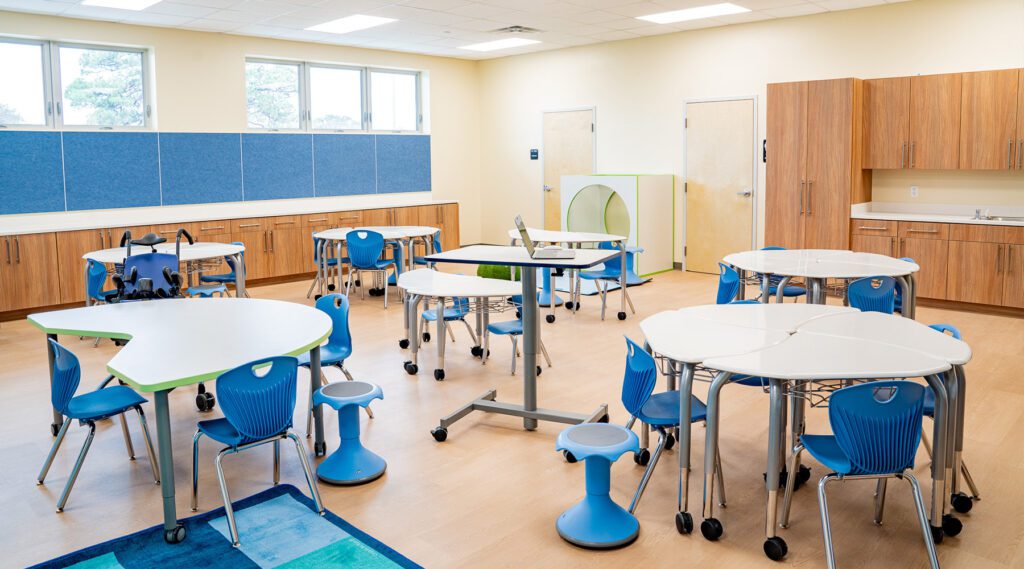
What “End-to-End” Actually Means
“End-to-end” shouldn’t be a buzzword. It should be a practical advantage.
In real terms, it means fewer handoffs, clearer ownership, and one coordinated process, from early planning through post-install follow-up.
Instead of asking districts to coordinate multiple vendors, contracts, and timelines, an integrated approach keeps the work connected. That’s where simplicity comes from: one thread, not scattered parts.
At Meteor Education, that integrated support includes:
- starting with instructional goals (not product lists)
- designing within real budget constraints
- sourcing across broad manufacturer partnerships and purchasing contracts
- coordinating delivery so spaces are ready when schools need them
- supporting educators so spaces are used as intended
- measuring outcomes to guide what comes next
The point isn’t just convenience. It’s accountability.
Simplifying Complexity Protects the Budget
Complexity doesn’t just create stress. It creates hidden cost.
Most budget overruns aren’t caused by one dramatic decision. They’re caused by rework:
- redesign cycles
- change orders
- reactive purchasing
- installation surprises
- timelines slipping into more expensive phases
Clear planning, coordinated execution, and fewer handoffs protect budget outcomes because they reduce rework and prevent late-stage surprises.
In fact, unplanned, reactive FF&E maintenance and repairs typically cost 25–30% more than those managed through strategic, proactive planning.
A simplified, end-to-end approach helps districts control costs by:
- reducing rework and change orders through upfront alignment
- maintaining flexibility through a broad network of trusted manufacturers (helpful when timelines shift)
- enabling phased implementation or pilots so progress continues even when full funding isn’t immediately available
The result: better predictability, fewer last-minute expenses, and learning environments that work on day one.
A Real-World Example: Chesterfield’s Cafeteria Transformation
The Challenge
Chesterfield County Public Schools set out to transform cafeterias across the district into modern dining commons that improved student flow, comfort, and overall experience.
The scope introduced real complexity:
- 16 school sites, each with unique layouts and branding needs
- high-traffic spaces serving hundreds of students daily
- multi-use environments (dining + collaboration + community use)
- phased execution to minimize disruption during the school year
- design, furniture, and logistics that all needed to align seamlessly
The Solution
Rather than managing each variable separately, the district partnered with Meteor Education to lead the process holistically, from early planning through implementation.
Meteor met with district leaders, visited each school, and engaged principals and cafeteria managers directly.
As CFO Kevin Caskey put it: “The principals had not done something like this before, so they didn’t really know what they wanted… Meteor was great at guiding them through the process.”
The Outcome
The cafeterias became welcoming, adaptable environments without adding complexity to the district team.
“Working with Meteor was one of the easiest projects I’ve been involved in… And they came in under budget.”
Kevin Caskey, Chief Financial Officer
Chesterfield’s story proves a simple point: Even large, high-use spaces don’t have to become high-stress projects when complexity is managed early and ownership is clear.
From Complexity to Confidence
District leaders don’t need fewer ideas. They need fewer unknowns.
With the right process and the right partner, districts can deliver ambitious next-generation learning environments (classrooms, shared spaces, and CTE labs) without turning the project into chaos.
Because the best projects aren’t the “simplest” ones. They’re the ones where complexity is managed well, decisions stay aligned, and the path forward stays clear.
meteor education
Looking for a clearer path forward?
See how thoughtful design and simplified delivery work together to support classrooms, labs, and shared spaces at any budget.