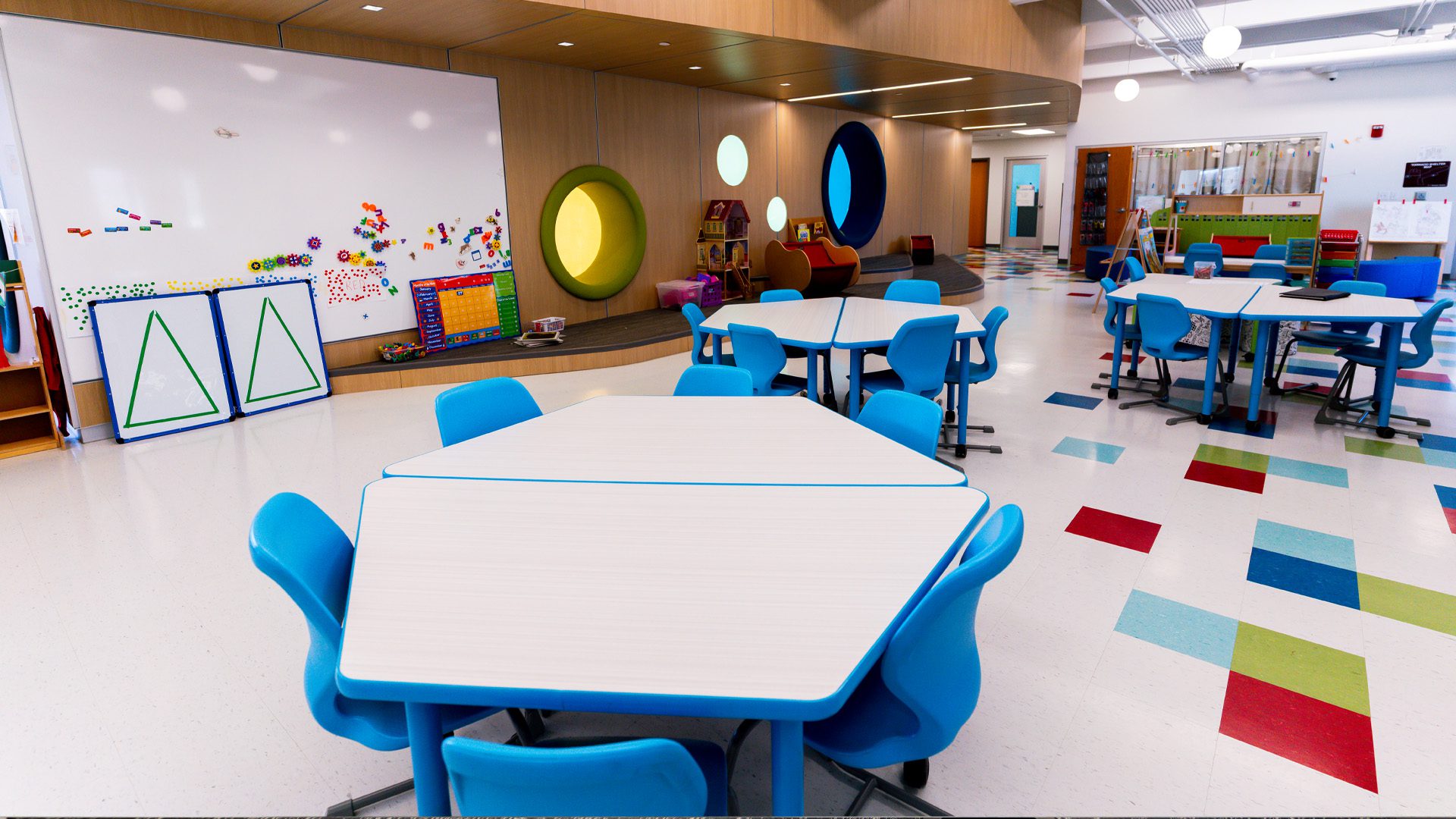
Foundations of Belonging — Designing Early Childhood and Elementary Environments That Change Trajectories
Course Description
The years from Pre-K through 5th grade are when the foundation is poured. What happens in those buildings — and what those buildings do to the children inside them — shapes trajectories that last a lifetime. Adverse Childhood Experiences are more common than most people realize, and their effects show up in elementary classrooms every day: the student who can’t settle, the one who shuts down, the one who needs the same corner every morning just to feel safe enough to learn. This course examines the research on ACEs across the full PK–5 continuum and translates it into design — what attachment, predictability, and restorative space look like as actual specifications across every grade in the elementary range.
Schools can’t undo what students have experienced. But the right building can buffer it — providing the consistency, safety cues, and sense of belonging that research shows can meaningfully reduce the long-term impact of early adversity. That’s not an aspiration. That’s what the evidence says. And it starts with the design.

Learning Objectives
- Identify the CDC’s ACEs pyramid and developmental research demonstrating how early built environments shape lifelong health, behavior, and learning outcomes — establishing the welfare case for intentional early childhood design.
- Examine how attachment, predictability, and sensory-appropriate scale translate into early childhood and elementary design decisions that function as protective factors against adverse outcomes.
- Apply design strategies — child-scaled spaces, secure caregiver-child sightlines, and supportive sensory environments — that strengthen protective relationships and reduce developmental risk factors.
- Evaluate early childhood and elementary environments against welfare criteria including accessibility, supervision, and developmental appropriateness.
Course Credits
1 LU | HSW