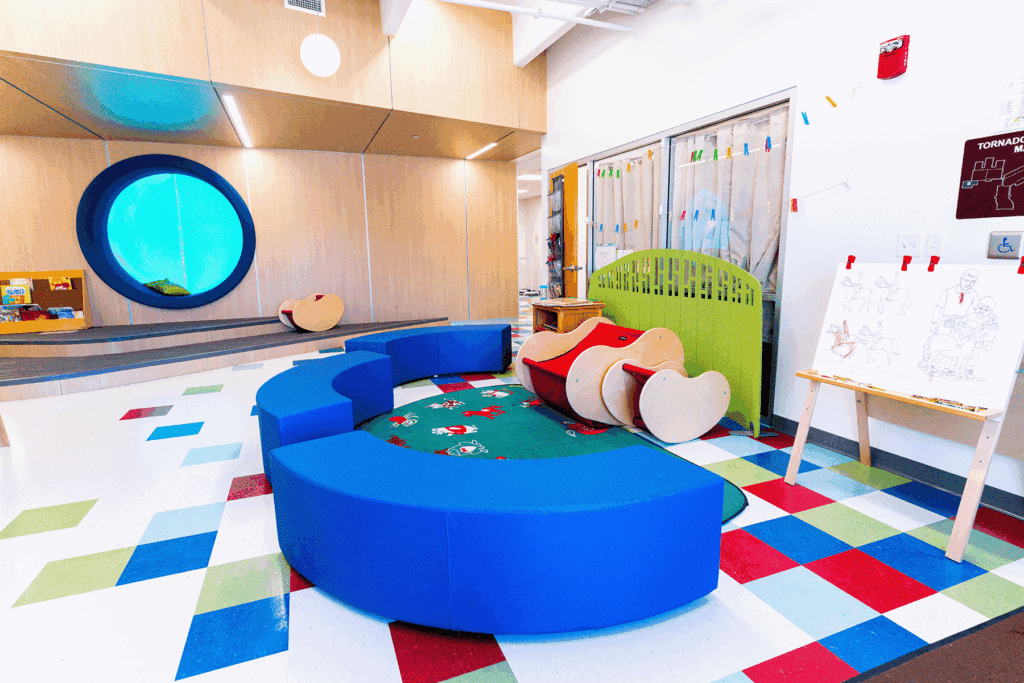
Building Learning Spaces for a New Generation in Sauk Centre
“I’ve been teaching for almost 30 years, and this is by far the best facility I’ve been able to work in.”
Kari Warring, Family and Consumer Science Teacher
The Challenge
The facilities of Sauk Centre Public Schools were showing their age. While the elementary school was updated in the 1990s, the middle and high schools dated back more than a half century. “Aside from the large appliances,” says Kari Warring, Family and Consumer Science Teacher, “I’m not sure anything had been changed since the 1960s or ’70s.”
Quick Facts
- Location: Sauk Centre, MN
- Population: 4,682
- Number of Schools: 3
Despite having served generations of students well, the classrooms, cafeterias, and common areas were increasingly mismatched to the needs of today’s learners. “If you had walked through the hallways, you would have noticed lots of teachers and kids sitting on the floor,” says Amy Millard, Principal at Sauk Centre Elementary. “Not a great learning environment, but we just didn’t have space for students to work in small groups or collaborate effectively.”
“For so many years, we just had rigid desks and tables. It didn’t give students much choice.”
Sheila Flatau, Principal, Sauk Centre Secondary
Students echoed this sentiment, describing the older classrooms as standard with hard chairs, rows of desks, and not very comfortable overall. As one student plainly states, “It kind of felt more like a prison.”
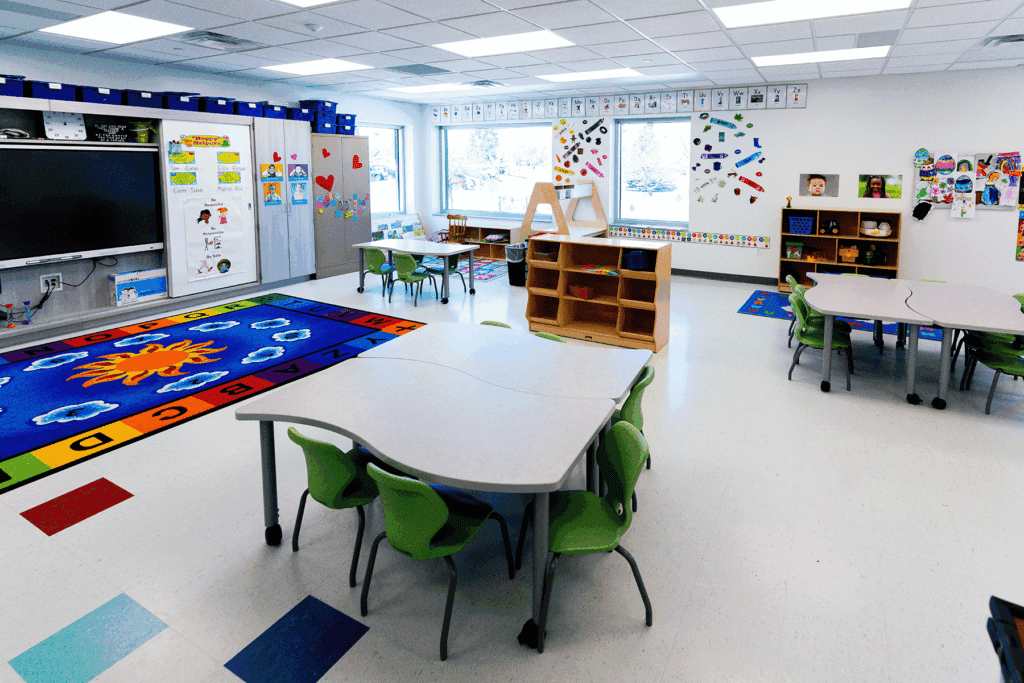
With growing enrollment and a clear desire for more flexible, collaborative environments, district leaders knew it was time to reimagine their schools for the next generation of learners.
The Solution
When they set out to modernize their facilities, district leaders envisioned much more than a basic facelift. “[We wanted] to create a 21st century learning environment that is more open, gives more flexibility for staff and students to learn and do more collaboration,” says Superintendent Donny Peschel. After evaluating multiple bids, the district agreed Meteor’s combination of quality furnishings, design expertise, and price made them the obvious choice. “They were clearly the #1 company to go with.”
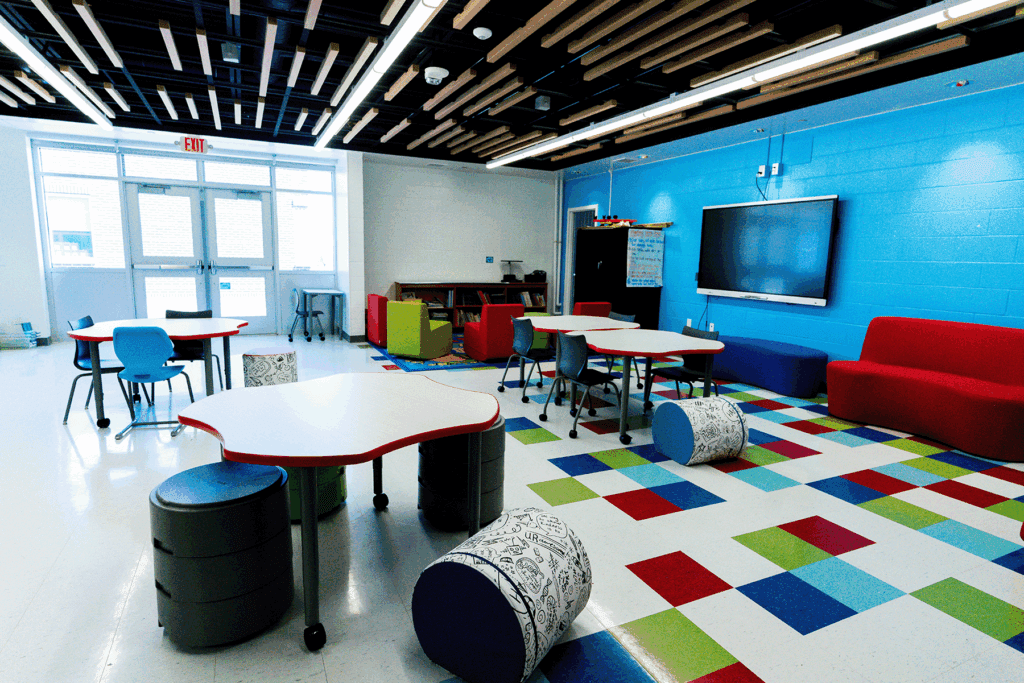
From the start, the partnership was highly collaborative. “Meteor was a huge part of putting the plan together and giving us what the design looked like,” Peschel continues. “They took our ideas and what we wanted to accomplish in our buildings and turned them into designs to make it happen.”
“Working with Meteor was the easiest part of our entire project. They were quick to respond, collaborative, and full of great ideas. I don’t know how the level of support could be any better.”
Sheila Flatau, Principal, Sauk Centre Secondary
Meteor’s design team worked closely with administrators and teachers to ensure that each space reflected how learning actually happens today. “Meteor not only thinks about what is going to look pleasing cosmetically,” Millard says, “but also what is the function of that space and how are you going to be able to use the furniture in that space to meet your goals.”
“It’s been a huge success for our kids and staff,” says Peschel. “By partnering with Meteor, we achieved exactly what we set out to do.”
The Impact
Naturally, the team was somewhat nervous as the open house event approached, where the school was going to unveil its updated facilities. “You’re never quite sure how people are going to feel once they get in the spaces,” says Millard. But the upgrades were more-than-well received, as Peschel sums up the reaction: “A sense of awe would be the best way to describe it.” Across the district, it’s clear that all the intentional planning and collaborative design processes delivered remarkable results.
“The old ways of educating, where you had rows of desks and tables, have changed. We wanted to create a scenario where students can expand their knowledge through different varieties of learning environments and that’s exactly what we’ve achieved here.”
Donny Peschel, Superintendent
One feature teachers point to right away is the set of new garage doors between classrooms. The glass panels brighten the space and make the rooms feel larger, but it’s the mobile, easy-to-move furniture that truly unlocks their potential.
When teachers open the doors, they can quickly roll tables, shift seating, and reconfigure the room to create a shared instructional space for two classes to learn together. “The new space is so much lighter and more open,” says Lisa Mergen, 2nd grade teacher. “It flows in a way that helps learning happen everywhere.”
“We don’t need a brand new building to make a change. We’re able to create spaces all teachers can access and use with what we already had.”
Sheila Flatau, Principal, Sauk Centre Secondary
In general, the new furniture has been a big hit, as there are now options to facilitate the preferred learning styles of different students — whether they want to sit, stand, or use a stool with a bit of wobble in it so they can “get their squiggles out.” Everyone loves that there’s student choice as well as a better way to accommodate special needs or injuries.
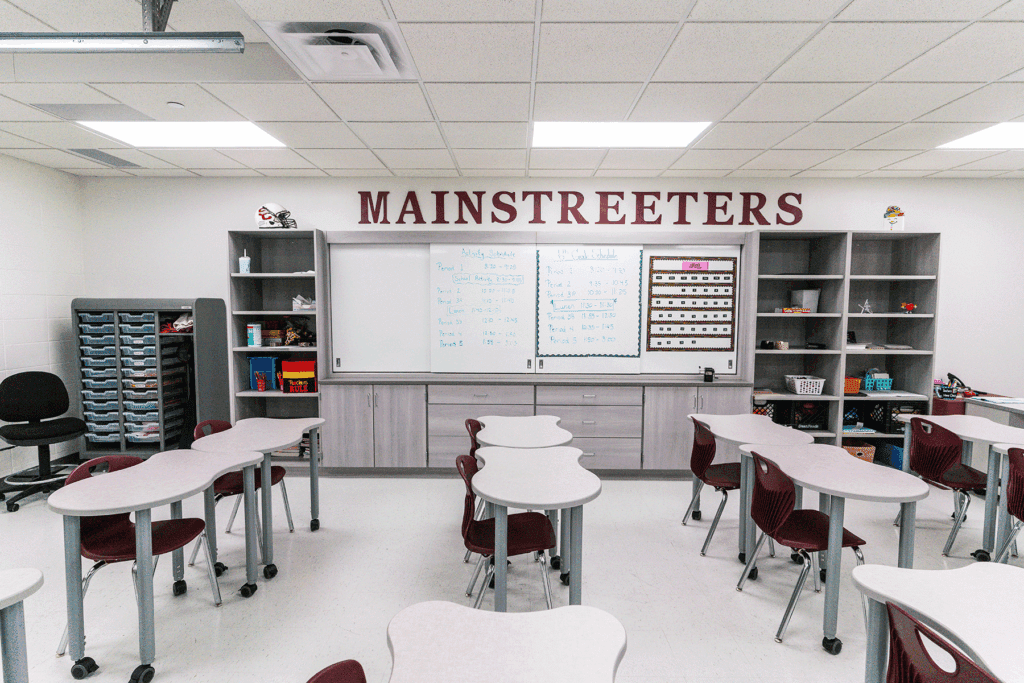
That choice in flexible furniture is consistent across each campus, so students can benefit from it wherever they go, greatly contrasting with the pre-renovation schools having a mismatch of chairs and desks throughout.
Teachers in early childhood programs are seeing benefits too. “We can easily shift spaces for different activities or even include parents in our preschool classes,” says Olivia Fuches, Preschool Teacher. “It’s so much easier to adapt.”
“It’s important to feel comfortable at school because it makes you feel safer.”
6th Grade Student, Sauk Centre Middle School
Students themselves have embraced the change. “When they came back after summer, they were so excited,” says Millard. “They’d say, ‘Wow, this looks so different! I can’t wait to use that!’ She notes that they enjoy using the makerspace with robots, the construction area, the creation station, among others. “The engagement has really increased.”
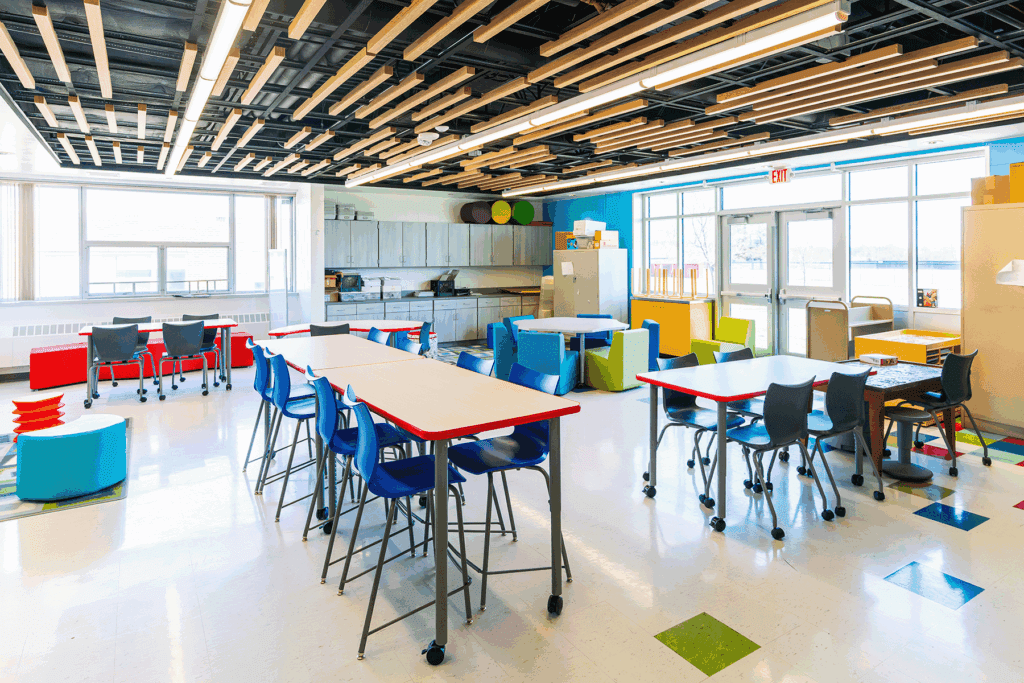
While the new furniture and equipment is clearly exciting in and of itself, teachers have noted a marked shift in both engagement and behavior of the students, especially in areas like the cafeteria. “Behavior has improved because of student choice,” says Flatau. “They can sit in small groups if they want or in bigger groups. It’s their space.”
“I’ve been teaching for almost 30 years, and this is by far the best facility I’ve been able to work in.”
Kari Warring, Family and Consumer Science Teacher
Feeling comfortable in their new spaces, teachers are reporting that students now work together more naturally, learning communication, conflict management, and problem-solving skills that extend beyond academics. “Skills that they can use the rest of their life,” says Rick Meyer, 6th Grade Teacher.
Sauk Centre’s schools, which for more than half a century had remained largely unchanged, now tell a very different story. “You’re always trying to put your families and students in the best possible spaces that you,” says Peschel. “By doing this, we’re giving our staff the ability to provide the best possible education we can.”
meteor education
Wondering how we turn ideas into fully realized learning environments?
Check out how our Collaborative Design Process works.